
Last Updated:
January 24, 2026
Pre-emergent is a type of proactive weed control specifically formulated to stop weeds before they ever become visible. Instead of targeting weeds that have already sprouted, these products focus on preventing unwanted plants from establishing themselves in the first place. This is widely considered one of the most effective ways to manage weeds because it addresses the problem at its earliest stage.
Pre-emergent herbicides are not designed to kill weeds that are already growing. Instead, they work by disrupting the development of young weed seedlings as they attempt to sprout. After application, the product forms a thin chemical layer near the soil surface. This layer acts as a barrier that interferes with cell division in newly germinated seedlings.
When a weed seed begins to grow and tries to push through the soil, it encounters this barrier and fails to develop properly. Without the ability to form roots or absorb nutrients, the seedling cannot survive. In most cases, it either remains dormant or dies off entirely before breaking through the surface.
This method of control offers a double benefit. Not only does it reduce the number of visible weeds in your lawn, but it also prevents those weeds from maturing and producing additional seeds that could cause future infestations.
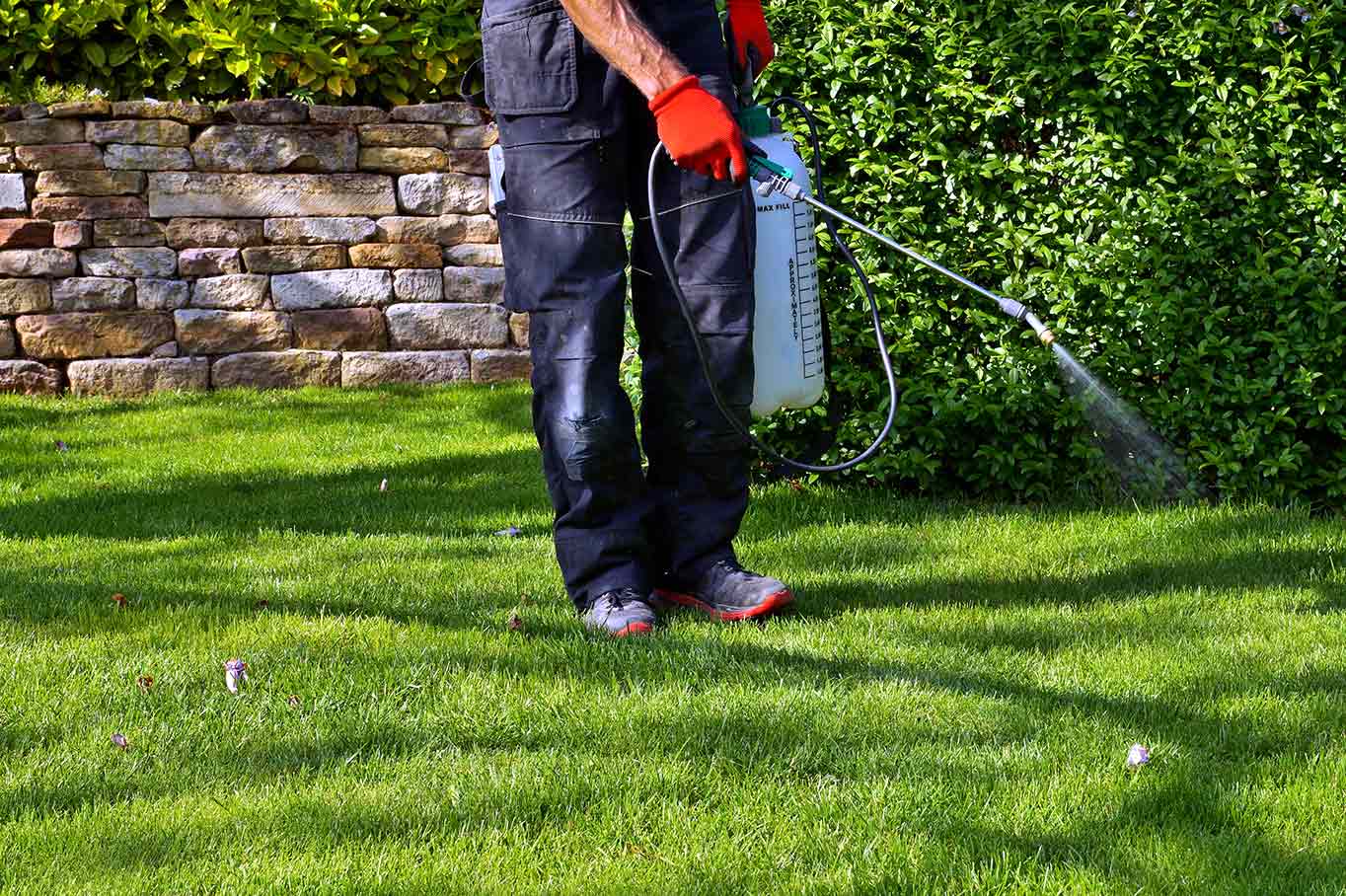
Liquid pre-emergents are commonly used for treating large lawns or expansive landscape areas. They are applied using a sprayer and can provide fast, uniform coverage when mixed and applied correctly. Many homeowners and professionals appreciate liquid products because they allow for precise application rates and consistent results across wide areas.
However, liquid pre-emergents do require careful preparation. Improper mixing or incorrect spray settings can lead to uneven coverage or potential damage to desirable plants, making attention to detail essential.
Granular pre-emergents are applied in pellet form and are often spread using a broadcast or drop spreader. These products are especially convenient for smaller lawns or garden beds and require little preparation compared to liquid treatments. Once applied, the granules must be watered in so they can dissolve and activate the protective barrier in the soil.
Granular products are often favored by homeowners looking for simplicity and ease of use, particularly for routine seasonal applications.
Different pre-emergent products rely on specific active ingredients to control a range of weeds. Some of the most commonly used compounds include:
Prodiamine: This ingredient is widely known for its effectiveness against grassy weeds such as crabgrass, along with certain broadleaf weeds like dandelions. It is also commonly used to suppress invasive grass species that spread aggressively in lawns.
Oryzalin: Frequently used in agricultural and ornamental settings, this compound is effective against weeds such as yellow foxtail and vining plants like bindweed and morning glory. It is often chosen for areas where long-lasting control is desired.
Dithiopyr: Dithiopyr is valued for its ability to control a broad range of grassy weeds, including crabgrass and creeping bentgrass. It also helps suppress certain broadleaf and vining weeds, making it a versatile option for lawn applications.
Many of the most troublesome lawn weeds, such as crabgrass, goosegrass, and spurge, begin germinating in early spring. Applying a pre-emergent before soil temperatures rise and weeds start growing is critical. In most regions, this typically means applying sometime in early spring, often around March, depending on local conditions.
Some weeds are classified as winter annuals, meaning they sprout in fall, survive through winter, and die in spring after producing seeds. Examples include annual bluegrass, chickweed, and speedwell. To prevent these weeds, pre-emergent should be applied in late summer or early fall, generally before mid-September.
Many lawn care products combine fertilizer and pre-emergent herbicide into a single application. This is especially common in early spring, when lawns benefit from nutrients while also needing protection from emerging weeds. Using a combination product can save time while promoting healthy turf growth.
Pre-emergents must be applied before weeds break through the soil surface. Once a weed is visible, a pre-emergent will have little to no effect. Proper timing is essential, as these products only work during the brief window between germination and emergence.
Pre-emergents cannot distinguish between weed seeds and grass seeds. For this reason, they should never be applied immediately before or after overseeding. Doing so will prevent new grass from germinating just as effectively as it stops weeds. If you plan to seed your lawn, wait until the grass has fully emerged before applying a pre-emergent treatment.
Q: Do all pre-emergents include fertilizer?
A: No. While many products combine fertilizer and pre-emergent herbicide, standalone pre-emergent options are widely available. Always check the product label to confirm whether fertilizer is included.
Q: Are pre-emergents effective against perennial weeds?
A: Pre-emergents can help reduce new seedlings from perennial weeds, but they are rarely enough on their own. Perennials tend to spread through established root systems or germinate repeatedly throughout the year, making complete control with pre-emergents alone difficult.
Q: How long does a pre-emergent treatment last?
A: Most pre-emergent herbicides remain effective for approximately three to five months. Factors such as heavy rainfall, excessive foot traffic, or improper watering can shorten their lifespan. Applying at the correct soil temperature and following watering guidelines helps maximize effectiveness.
Q: How much product should be applied?
A: Achieving full, even coverage is far more important than applying extra product. Missed areas can quickly become weed hotspots. As a general guideline, about one to two gallons of liquid mixture is typically needed per 1,000 square feet, depending on the product label.
Q: Will reapplication be necessary?
A: Yes. Weed seeds can remain dormant in the soil for years, and some weeds regenerate from roots or plant fragments rather than seeds. Reapplying pre-emergent at appropriate intervals is a normal part of an effective, long-term weed control strategy.


Welcome to Little John’s Lawns! We are a family-owned company that specializes in providing professional lawn maintenance, lawn care, and irrigation services in Gilbert, Chandler, Mesa, and Queen Creek, AZ.