
Last Updated:
April 25, 2026
When it comes to trimming and shaping your shrubs, you may be deciding whether to use powered hedge trimmers or stick with manual tools. Power trimming is used to quickly remove overgrowth of shrubs and bushes, while hand trimming allows for more detailed shaping of your plant.
If you’ve ever noticed shrubs that look neat on the outside but thin or woody inside, the trimming method is often the reason. Keep reading to learn a bit more about the differences.
It’s easy to think of trimming as a purely visual task, but every cut you make influences how a shrub develops moving forward. The way branches are removed determines how sunlight reaches the plant, how air moves through it, and how new growth forms.
When shrubs are repeatedly cut only on the surface, they tend to become dense on the outside while the interior weakens over time. On the other hand, more selective trimming opens the plant up, allowing it to grow evenly from the inside out.
Why Your Technique Matters:
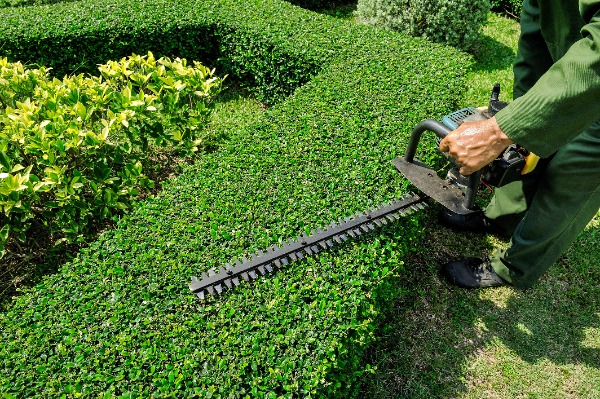
Power trimming relies on electric or gas-powered tools designed to cut quickly across the surface of shrubs. This method is commonly used for hedges or properties with a large number of plants that need consistent shaping.
Instead of targeting individual branches, power trimmers create a uniform outer layer by cutting everything at once. This gives shrubs a crisp, clean appearance, especially in landscapes that favor straight lines and symmetry.
However, because it focuses only on the exterior, this method doesn’t address what’s happening inside the plant. Over time, repeated surface cutting can lead to overly dense outer growth that blocks light from reaching the center.
There’s a reason power trimmers are widely used. They're efficient and effective in the right situations. When shrubs are already healthy and well-shaped, this method makes it easy to maintain a polished look without spending hours on detailed work.
That said, relying on this method alone can eventually create more work, especially if shrubs become too dense or start to decline internally.
When Power Trimming Makes Sense:
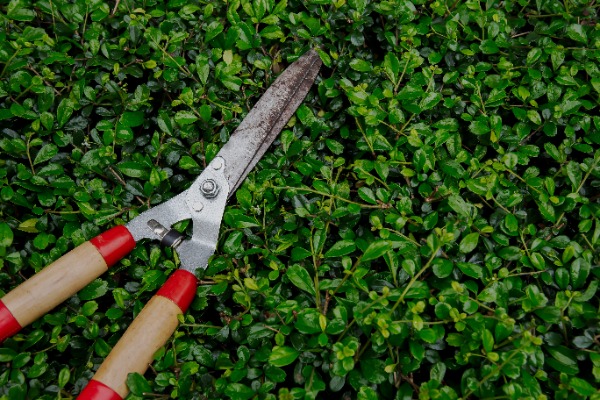
Hand trimming is a slower, more intentional process that involves removing specific branches one at a time. Using tools like pruners or loppers, you can shape the shrub based on its natural structure rather than forcing it into a uniform shell.
This approach allows you to thin out crowded areas, remove weak or damaged growth, and guide the plant in a way that supports long-term health. Instead of simply controlling size, hand trimming improves the overall condition of the shrub. Although it requires more effort, the results are often more balanced and longer-lasting.
For homeowners who want healthier shrubs and more natural-looking landscapes, hand trimming offers a level of control that machines simply can’t match. It allows you to work with the plant instead of cutting over it.
This method is especially important for shrubs that haven’t been properly maintained or need more than just a surface-level cleanup.
When Hand Trimming Is The Better Choice:
In most landscapes, the best results come from using both techniques at different times. Rather than choosing one over the other, it’s more effective to think of them as tools for different purposes.
Power trimming works well for maintaining shape and saving time, while hand trimming is essential for improving structure and overall plant health. Using them together allows you to keep shrubs looking sharp without sacrificing their long-term condition.
Even with the right tools, improper trimming can create issues that are difficult to fix later. Many of these problems come from focusing too much on speed or appearance without considering how the plant will respond.
Being mindful of these habits can prevent long-term damage and reduce the need for major corrections down the road.
Mistakes To Avoid:
Instead of approaching shrub care as a one-step process, it’s more effective to build a routine that includes both maintenance and corrective work. Periodic hand trimming can keep shrubs healthy internally, while occasional power trimming helps maintain a clean, finished look.
This balanced approach not only improves the appearance of your landscape but also reduces the likelihood of problems developing over time. Healthier shrubs require less frequent intervention and respond better to regular care. Check out Little John’s trimming services for more help with taking care of your shrubs in Arizona!
Q: Is power trimming bad for shrubs?
A: Not necessarily, but it shouldn’t be the only method you use. Overusing power trimmers can lead to dense outer growth and weaker interiors if shrubs aren’t occasionally thinned by hand.
Q: How often should I hand trim my shrubs?
A: Most shrubs benefit from selective hand trimming once or twice per year, depending on growth rate and condition. This helps maintain structure and prevent overcrowding.
Q: Can I switch between power trimming and hand trimming?
A: Yes, and it’s often the best approach. Use hand trimming to manage structure and health, then power trimming for light maintenance and shaping.
Q: Why do my shrubs look full on the outside but bare inside?
A: This usually happens from repeated surface trimming. The outer layer blocks sunlight, preventing inner growth from developing properly.
Q: What types of shrubs should always be hand trimmed?
A: Flowering shrubs, ornamental plants, and anything with a natural growth habit typically respond better to hand trimming, as it preserves their shape and encourages better blooming.
Q: Do I need professional help for shrub trimming?
A: If shrubs are heavily overgrown, uneven, or haven’t been maintained properly, professional trimming can help restore their shape and health more effectively than trial-and-error.


Welcome to Little John’s Lawns! We are a family-owned company that specializes in providing professional lawn maintenance, lawn care, and irrigation services in Gilbert, Chandler, Mesa, and Queen Creek, AZ.