
Last Updated:
July 11, 2026
Most homeowners and lawn care enthusiasts understand that aeration helps relieve soil compaction, yet they often overlook the details that determine whether the service actually benefits the lawn. Aerating at the wrong time, using the wrong equipment, or skipping important follow-up care can limit results and leave your yard looking no better than before.
Whether you're planning to rent an aerator or simply want to better understand the process, knowing what mistakes to avoid can save time, money, and frustration. Below are some of the most common lawn aeration mistakes homeowners make and how you can avoid them!
One of the biggest misconceptions about lawn aeration is that it can be done whenever it's convenient. In reality, timing plays a major role in how well your grass recovers.
Aeration temporarily stresses your lawn by creating thousands of small holes in the soil. Healthy, actively growing grass recovers quickly, while dormant or slow-growing grass may struggle to repair itself. As a general rule:
Soil moisture is often overlooked, but it directly affects how well an aerator can penetrate the ground. If the soil is extremely dry, the machine may struggle to remove complete soil plugs, reducing the effectiveness of the process.
On the other hand, saturated soil can smear instead of fracturing, which doesn't properly relieve compaction. Ideally, the soil should be slightly moist before aeration. A light rainfall or moderate irrigation a day or two beforehand usually creates ideal conditions. Signs the soil moisture is about right include:
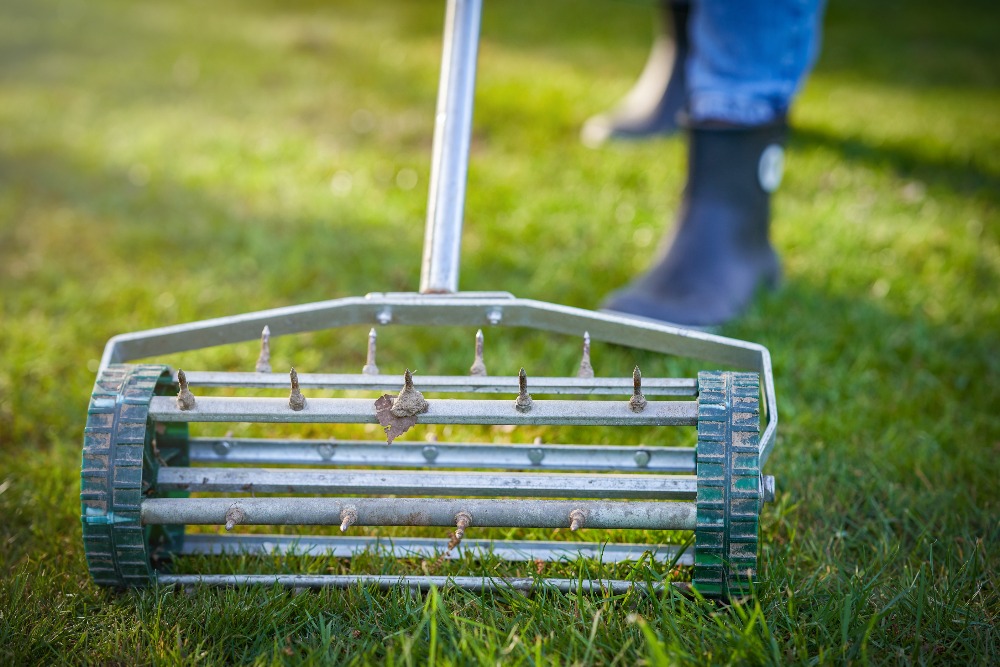
Many homeowners purchase inexpensive spike aerator sandals or rolling spike tools because they appear simple to use. Unfortunately, these products rarely provide the same long-term benefits as true core aeration.
Spike aerators simply poke holes into the ground while pushing soil sideways. In compacted lawns, this can actually increase compaction around the holes. Core aerators remove plugs of soil, creating open channels that improve:
Many people assume a single trip across the yard is enough, but heavily compacted lawns often need additional coverage. Areas that experience heavy foot traffic, pet activity, or repeated mowing patterns usually develop severe compaction that isn't completely relieved with one pass.
Professional lawn care companies often make multiple passes in different directions to achieve better hole spacing and more consistent coverage. Pay particular attention to:
Aeration creates thousands of openings that provide ideal seed-to-soil contact. Missing this opportunity is one of the biggest mistakes homeowners make.
If your lawn has thin patches, worn areas, or aging turf, overseeding immediately after aeration allows new grass plants to establish far more easily than seeding on compacted soil.
Combining aeration and overseeding can help:
After aeration, many homeowners are tempted to rake up or bag the small plugs scattered across the lawn because they appear messy. However, these soil cores serve an important purpose. As they naturally break apart, they return valuable organic matter and beneficial microorganisms to the surface while helping improve soil structure.
Instead of removing them, allow normal rainfall, irrigation, mowing, and earthworms to gradually break the cores down over the next couple of weeks. The temporary appearance is well worth the long-term improvement in soil health.
Aeration opens pathways for moisture to reach the roots, making post-aeration watering especially important. The goal is to keep the soil consistently moist without creating puddles or excessive runoff.
Without adequate moisture, stressed grass may recover more slowly, and newly seeded areas may struggle to germinate. A proper watering schedule after aeration helps:
While renting an aerator is certainly possible, professional lawn care companies typically deliver more consistent results thanks to their experience and commercial-grade equipment.
Professionals know how to evaluate soil conditions, determine the appropriate aeration pattern, and identify areas requiring additional attention. They also frequently combine aeration with services like overseeding, fertilization, or soil amendments to maximize the benefits.
Professional aeration also eliminates the hassle of transporting heavy equipment, learning how to operate it, and spending hours completing the work yourself. For homeowners who want healthier grass with less trial and error, professional aeration is often the more effective long-term solution.
Q: How often should a lawn be aerated?
A: Most lawns benefit from core aeration once per year. Lawns with heavy clay soil, frequent foot traffic, or significant compaction may benefit from aeration twice annually, depending on growing conditions.
Q: Can I aerate my lawn myself?
A: Yes. Equipment rentals are available, but core aerators are heavy and can be difficult to operate. Many homeowners choose professional aeration for more thorough coverage and better overall results.
Q: Is it okay to fertilize after aeration?
A: Yes. Aeration creates channels that allow fertilizer to move more effectively into the roots, making it one of the best times to apply nutrients.
Q: Should I mow before my lawn is aerated?
A: Mowing one or two days before aeration is generally recommended. Slightly shorter grass allows the equipment to reach the soil more easily while making the soil plugs less noticeable afterward.
Q: Will aeration remove thatch?
A: Core aeration can help reduce minor thatch buildup by encouraging microbial activity and decomposition, but it is not a replacement for dethatching when a thick thatch layer has developed.
Q: How long does it take to see results after aeration?
A: Some improvements, such as better water absorption, can occur almost immediately. Visible changes in grass thickness and overall lawn health typically become more noticeable over several weeks or during the next active growing season, especially when aeration is paired with proper watering, fertilization, and overseeding.


Welcome to Little John’s Lawns! We are a family-owned company that specializes in providing professional lawn maintenance, lawn care, and irrigation services in Gilbert, Chandler, Mesa, and Queen Creek, AZ.